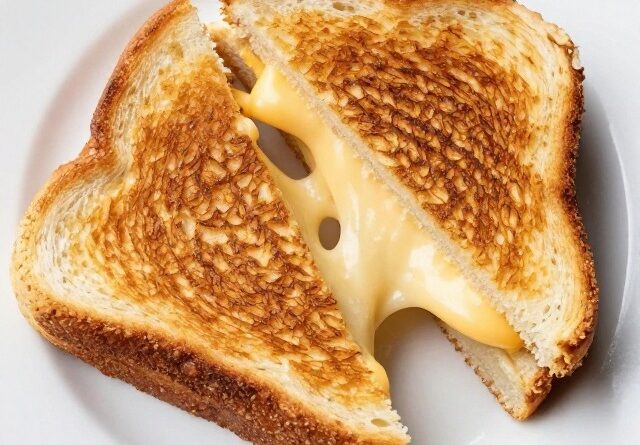
Grilled Cheese Sandwich Recipe (Never Burnt, Always Melty)
Every grilled cheese I made as a kid came out one of two ways — burnt outside with a cold center, or greasy enough to see through the bread. The lid trick fixed both problems the first time I tried it.
Grilled cheese seems too simple to get wrong, until you end up with burnt bread and a cold, unmelted center, or bread so soggy with butter it falls apart before it even hits the pan. This grilled cheese sandwich recipe fixes both problems with one method: low heat, a lid to trap steam for faster melting, and a cheese blend that melts evenly instead of separating into an oily mess. The technique below works whether you’re making one sandwich for lunch or a whole batch for a family dinner alongside a pot of soup.
Quick Summary
This grilled cheese sandwich recipe uses a low-and-slow stovetop method with a lid to melt the cheese fully before the bread over-browns, the single most common fix for the classic “burnt outside, cold middle” problem. A comparison table below breaks down stovetop, oven/sheet-pan, cast-iron press, and air fryer methods side by side, so you can pick the one that fits your situation instead of guessing. The recipe includes gourmet, healthy, and gluten-free variations, plus the real reason grilled cheese turns out greasy or soggy. Expect a finished sandwich in about 10 minutes.
Recipe Snapshot
| Detail | Info |
| Prep Time | 3 minutes |
| Cook Time | 6 minutes |
| Servings | 1 sandwich |
| Calories | 460 per sandwich |

Ingredients for Grilled Cheese Sandwich Recipe
- 2 slices sandwich bread
- 1 1/2 tablespoons unsalted butter, softened
- 2-3 slices cheese, or 3/4 cup shredded (see cheese guide below)
- 1/2 teaspoon Dijon mustard, optional

How to Make Grilled Cheese
- Butter the bread. Spread softened butter on one side of each bread slice, all the way to the edges.
- Add the cheese. Flip one slice butter-side down, spread the mustard on the inside if using, and layer on the cheese. Top with the second slice, butter-side up.

- Heat the pan. Heat a nonstick skillet over medium-low heat. Do not preheat on high; this is the most common cause of burnt bread with unmelted cheese inside.
- Cook covered. Place the sandwich in the pan and cover with a lid. Cooking covered traps steam, which helps the cheese melt through before the bread burns. Cook for 3 minutes.

- Flip and finish. Remove the lid, flip the sandwich, and cover again. Cook for another 2 to 3 minutes, until both sides are deep golden brown and the cheese is fully melted.
- Rest briefly, then cut. Let the sandwich sit for 30 seconds before cutting, so the cheese sets just enough to hold together for a clean cut.
Cut it while the cheese is still stretchy — you want that slow pull between the two halves, not a clean snap.
Method Comparison: Stovetop vs. Oven vs. Cast-Iron Press vs. Air Fryer
Every grilled cheese sandwich recipe online commits to one method without explaining how the others compare. Here’s the direct breakdown:
| Method | Time | Texture | Best For |
| Stovetop with lid (this recipe) | 6-8 minutes | Golden, crisp exterior, fully melted center | Single sandwiches, most reliable for beginners |
| Oven/sheet-pan | 10 minutes at 400°F | Evenly golden, less hands-on | Making 4 or more sandwiches at once |
| Cast-iron press (two skillets) | 8-10 minutes | Extra crisp, pressed, gourmet texture | A more restaurant-style crust and even browning |
| Air fryer | 6-8 minutes at 360°F | Crisp exterior, can dry out if overcooked | Quick single sandwiches without dishes to wash |
For the oven method, arrange buttered sandwiches on a rimmed baking sheet and bake at 400°F for 5 minutes per side. For the air fryer method, cook at 360°F for 3 to 4 minutes per side, checking early since air fryers vary in strength.
Cheese Guide: What Melts Best
Cheese choice makes or breaks a grilled cheese sandwich, and it’s rarely explained beyond “use cheddar.”
| Cheese | Melt Quality | Flavor |
| Sharp cheddar | Melts well, can separate slightly if overheated | Sharp, classic |
| Mozzarella | Excellent melt, very stretchy | Mild |
| Gruyère | Excellent melt, smooth | Nutty, rich |
| Gouda | Excellent melt, very smooth | Mild, slightly smoky |
| American | Melts the smoothest of any cheese | Mild, classic diner-style |
| Brie | Melts well, adds creaminess | Buttery, mild |
A blend of two or three cheeses (like sharp cheddar for flavor plus mozzarella or gouda for stretch) consistently outperforms a single cheese for both melt and taste.
Why Is My Grilled Cheese Soggy, Greasy, or Burnt on the Outside?
These are the three most common complaints, and each has a specific fix:
- Burnt outside, cold center: The heat was too high. Grilled cheese needs medium-low heat and patience; high heat browns the bread before the cheese has time to melt.
- Greasy or soggy bread: Too much butter, or butter that wasn’t spread evenly. Use a thin, even layer, and avoid pooling butter in the center of the bread.
- Cheese leaking out instead of staying inside: The pan was too hot, causing the cheese to melt and run before the bread structure set. Lower the heat and cook longer instead of rushing it.
Common Mistakes to Avoid
- Using cold butter straight from the fridge. It tears the bread instead of spreading evenly. Let it soften at room temperature first.
- Skipping the lid. Cooking uncovered is the single biggest reason for unmelted centers with overbrowned bread.
- Flipping too often. Flip once, not repeatedly; constant flipping prevents a deep, even crust from forming.
- Overfilling with cheese. Too much cheese takes longer to melt through and can ooze out before it’s fully melted.
- Using pre-shredded cheese only. Pre-shredded cheese contains anti-caking starch that can make the melt slightly grainy; a block of cheese, shredded or sliced fresh, melts more smoothly and gives that classic stretchy pull.
- Tip: Try butter + mayo. For an even crispier, more evenly browned crust, mix equal parts softened butter and mayonnaise and spread that instead of butter alone. The Kitchn found in taste tests that the mayo’s oil content browns more evenly than butter alone, and it won’t taste like mayo once cooked.
Variations on This Grilled Cheese Sandwich Recipe
- Cheese sandwich grilled recipe (classic): The base recipe above, using sharp cheddar or American cheese.
- Best cheese for grilled cheese sandwich recipe: A blend of sharp cheddar and mozzarella or gouda gives the best combination of flavor and stretch, as covered in the cheese guide above.
- Good grilled cheese sandwich recipes (gourmet): Use a blend of Gruyère and brie, a swipe of Dijon mustard, and sourdough bread for a more elevated version.
- Grilled cheese and tomato soup recipe: Serve the classic sandwich alongside a bowl of tomato soup for the traditional pairing; the acidity of the soup balances the richness of the cheese.
- Gourmet grilled cheese recipes: Try Gruyère and caramelized onions, or brie with fig jam, using sturdy bread like sourdough or a country loaf.
- Air fryer grilled cheese recipe: Assemble the sandwich as directed, then air fry at 360°F for 3 to 4 minutes per side until golden and melted.
- Grilled cheese burrito recipe: Wrap a cheese-filled tortilla instead of bread, then cook it in the skillet the same way, pressing gently to help it hold its shape.
- Grilled ham and cheese sandwich recipe: Add 2-3 slices of deli ham or turkey ham between the cheese layers before cooking.
- Pizza grilled cheese recipe: Add a spoonful of marinara sauce and a few pepperoni slices along with the cheese, using mozzarella as the primary cheese.
- Sourdough grilled cheese recipe: Use the same method with sourdough bread, which holds up especially well to the buttery, crisp exterior.
- Easy grilled cheese sandwich recipe: The base recipe above is already about as simple as it gets — two ingredients, one pan, no special equipment.
- Grilled cheese oven recipe: See the oven/sheet-pan method in the comparison table above for making multiple sandwiches at once.
- Simple grilled cheese sandwich recipe: Same as the easy version — bread, butter, and a single type of cheese, no extras required.
- French onion grilled cheese sandwich recipe: Add a spoonful of caramelized onions and a slice of Gruyère for a grilled cheese inspired by French onion soup.
- Healthy grilled cheese recipes: Use whole wheat or sprouted bread, a lighter spread of butter or olive oil instead, and a reduced-fat cheese for a lighter version without losing the core technique.

More Grilled Cheese Searches, Answered
A few phrasings point to the same method and recipe covered above:
- Best grilled cheese recipe and best grilled cheese recipes: Both point to this method — medium-low heat, a lid for even melting, and a cheese blend of sharp cheddar with mozzarella or gouda for the best combination of flavor and stretch.
- Best recipe for grilled cheese: Same answer as above; the technique matters more than any single “secret” ingredient.
- Best grilled cheese sandwich recipe and best cheese for grilled cheese recipe: See the Cheese Guide table above for exactly which cheeses melt best and why a blend consistently outperforms a single cheese.
- Tomato soup and grilled cheese recipe and grilled cheese tomato soup recipe: Make the classic sandwich above and serve it alongside a bowl of tomato soup; the acidity of the soup is a classic contrast to the richness of the melted cheese.
Nutrition (Per Sandwich)
| Nutrient | Amount |
| Calories | 460 |
| Total Fat | 30g |
| Saturated Fat | 16g |
| Carbohydrates | 28g |
| Sugar | 3g |
| Protein | 17g |
Nutrition values are estimates based on standard ingredients and will vary depending on the exact bread, cheese, and butter amounts used.
Storage and Reheating
Grilled cheese is best fresh, since the crisp exterior softens quickly once cooled. If you do have leftovers, store in an airtight container in the refrigerator for up to 3 days. Reheat in a skillet over medium-low heat for 2 to 3 minutes per side to re-crisp the bread and re-melt the cheese; microwaving works in a pinch but leaves the bread soft rather than crisp. If you’re planning to make several sandwiches ahead of a busy week, it’s better to prep the ingredients (butter the bread, portion the cheese) separately and assemble fresh, since a fully assembled cold sandwich takes noticeably longer to melt through evenly once it hits the pan.
Frequently Asked Questions
Why is my grilled cheese sandwich recipe burning before the cheese melts?
The heat is too high. Cook over medium-low heat with the lid on, which gives the cheese time to melt fully before the bread over-browns.
What is the best cheese for a grilled cheese sandwich recipe?
A blend of sharp cheddar for flavor and mozzarella or gouda for stretch and smooth melting is the most consistent combination, as covered in the cheese guide above.
Can I make a grilled cheese sandwich recipe without butter?
Yes. Mayonnaise spread on the outside of the bread works as a substitute and browns just as well, sometimes even more evenly, than butter.
How do I make a grilled cheese sandwich recipe in the oven?
Butter both sides of the bread, assemble the sandwiches, and bake on a rimmed sheet pan at 400°F for about 5 minutes per side, flipping once, until golden and melted.
Why is my grilled cheese sandwich recipe soggy?
Too much butter, or butter that pooled instead of spreading evenly, is the most common cause. A thin, even layer edge to edge prevents this.
Can I make a healthy grilled cheese sandwich recipe?
Yes. Whole wheat or sprouted bread, a light spread of butter or olive oil, and a reduced-fat cheese all work well without changing the core cooking method. The technique (medium-low heat, a lid, even butter distribution) matters more for the final result than which specific bread or cheese you start with, so these swaps won’t require any other changes to the method.
Can I use olive oil instead of butter for grilled cheese?
Yes. Brush a thin, even layer of olive oil on the outside of the bread instead of butter. It browns well and adds a slightly different, more savory flavor, though butter still gives the classic richer taste most people expect.
How many slices of cheese should I use for grilled cheese?
Two to three regular slices, or about 3/4 cup shredded, is enough to fully cover the bread without so much that it takes too long to melt through or oozes out the sides. Thin slices melt faster and more evenly than one thick block.
Related Recipes

Grilled Cheese Sandwich Recipe
Ingredients
Equipment
Method
- Spread softened butter on one side of each bread slice, all the way to the edges.
- Flip one slice butter-side down, spread mustard on the inside if using, and layer on the cheese. Top with the second slice, butter-side up.
- Heat a nonstick skillet over medium-low heat.
- Place the sandwich in the pan and cover with a lid. Cook for 3 minutes.
- Remove the lid, flip the sandwich, and cover again. Cook for another 2 to 3 minutes, until golden and fully melted.
- Let the sandwich sit for 30 seconds before cutting.
Notes
- See the Method Comparison table in the post for oven, cast-iron press, and air fryer versions.
- See the Cheese Guide table in the post for which cheeses melt best.
- Store leftovers in an airtight container in the fridge for up to 3 days.
Disclaimer: This recipe is intended for general home cooking purposes. Cooking times may vary depending on your stovetop, pan, and ingredient brands. This post does not hold a clinical nutrition credential and should not replace advice from a doctor or registered dietitian, particularly for those with dietary restrictions or allergies (this recipe contains gluten and dairy unless substituted as noted in the Variations section).
About the Author: Jonas Mitchell has strong opinions about grilled cheese from testing a lot of versions for RecipeValley. He holds no clinical nutrition credential, so treat this as kitchen-tested, not medically reviewed.
Pingback: Best Creamy Buldak Ramen Recipe in 15 Minutes (No Scramble Egg)