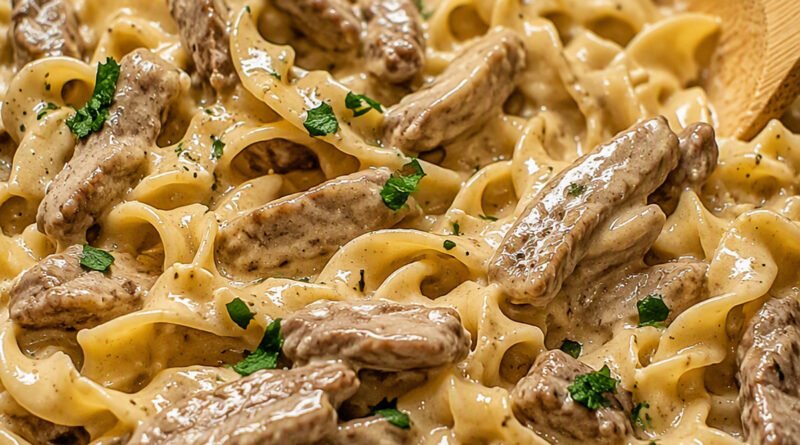
Beef Stroganoff Recipe: Best Classic & Ground Beef (6 Variations)
The first stroganoff I made turned into a curdled, grainy mess the moment the sour cream hit the hot pan. Pulling the pan off heat first is the one step that fixed it permanently.
This is one of the more thorough beef stroganoff guides online, covering both versions people actually make: the classic steak version with a quick sear and a creamy sour cream sauce, and a faster, easy beef stroganoff recipe using ground beef for busy weeknights. Between the two methods, the sauce guide, and six variations, it’s built to be the only one worth bookmarking.
What sets this guide apart from most single-version recipes online is that it doesn’t force a choice between “the proper way” and “the quick way.” Some nights call for a good cut of steak and a hot pan. Other nights call for a pound of ground beef and twenty minutes. Both are covered here in full, with a clear comparison of stovetop, slow cooker, and Instant Pot timing so it’s easy to pick whichever fits the evening.
Quick Summary
The classic version below sears sirloin strips fast and hot, then builds a sauce from broth, mustard, Worcestershire, and sour cream. A ground beef version cuts the time to about 20 minutes for a budget-friendly weeknight option. Beyond the two base recipes, a dedicated sauce guide, a cuts-of-beef comparison, and six variations (no mushrooms, with meatballs, one-pan skillet, lightened-up, dairy-free, and extra creamy) cover nearly every way this dish gets searched for.
| Prep Time | Cook Time | Servings | Calories |
| 10 minutes | 20 minutes | 4 | 460 per serving |
Where Did It Come From?
The dish traces back to 1800s Russia, generally tied to the Stroganov family, a wealthy noble household — Smithsonian Magazine covers this history in detail. The most common account credits a French-trained chef in their employ with developing the dish, thin strips of beef in a tangy sour cream sauce, and naming it after the family. The earliest known written version of the recipe appeared in a Russian cookbook in 1871.
The ground beef version has its own, more recent history. As the dish became a staple of American home cooking after World War II, cooks looking for a cheaper, faster alternative to a good cut of steak started swapping in ground beef, which is how “hamburger stroganoff” became its own established branch of the recipe rather than a shortcut or a compromise.
Best Cuts of Beef for Stroganoff
Because the beef only cooks for a minute or two per side, the cut matters more here than in a slow braise. Tender, quick-cooking cuts hold up; anything meant for long, low cooking will turn chewy.
| Cut | Texture When Seared Quickly | Recommended? |
| Sirloin or top sirloin | Tender, good marbling | Yes — best all-around choice |
| Ribeye (boneless) | Very tender, rich flavor | Yes — a step up if the budget allows |
| Beef tenderloin | Extremely tender | Yes — the traditional, higher-cost option |
| Flank or skirt steak | Tender if sliced thin against the grain | Yes, with careful slicing |
| Chuck or round steak | Tough, chewy when quick-seared | No — better suited to slow cooking |
If a budget cut is all that’s on hand, tenderizing it first (thin-slicing against the grain and briefly marinating with a touch of baking soda or an acidic marinade) closes most of the gap.

Full Recipe: Classic Steak Version
Ingredients
- 1 lb sirloin steak, thinly sliced into strips
- 2 tablespoons olive oil, divided
- Salt and black pepper
- 1 medium onion, sliced
- 8 oz mushrooms, sliced
- 2 tablespoons butter
- 2 tablespoons all-purpose flour
- 2 cups beef broth
- 1 tablespoon Dijon mustard
- 1 tablespoon Worcestershire sauce
- 2/3 cup sour cream
- 8 oz egg noodles, for serving
- Chopped parsley, for garnish
Instructions
- Pat the beef strips dry and season with salt and pepper.
- Heat 1 tablespoon oil in a large skillet over high heat. Add half the beef in a single layer and sear for 30-60 seconds per side, until browned but not fully cooked through. Remove to a plate. Repeat with the remaining oil and beef.
- Reduce heat to medium. Add the butter and onion, cooking for 2 minutes, then add the mushrooms and cook until golden, scraping up any browned bits on the bottom of the pan.
- Sprinkle in the flour and stir for 1 minute.
- Slowly whisk in the beef broth, then add the mustard and Worcestershire sauce. Simmer for 3-5 minutes, until slightly thickened.
- Reduce heat to low and stir in the sour cream until smooth, taking care not to let it boil.
- Return the beef and any accumulated juices to the pan, and simmer for 1 minute, just until heated through.
- Serve over egg noodles, garnished with parsley.
The depth in this sauce comes from a proper sear, Worcestershire sauce, and a good beef broth reduction — no deglazing liquid beyond the broth itself is needed to get a rich, restaurant-style sauce.

Ground Beef Version (Quick & Budget-Friendly)
Skip the searing step entirely — this is the quicker, budget-friendly version. Brown 1 lb of ground beef with the onion and garlic directly in the pan, drain any excess fat, then build the same flour-broth-sour cream sauce around it. This hamburger beef stroganoff recipe is ready in about 20 minutes total and costs a fraction of the steak version, which is exactly why it became its own tradition rather than staying a stand-in. It’s also about as simple beef stroganoff recipe as it gets — one pan, one pot of noodles, done.
For an even faster shortcut, this beef stroganoff recipe with cream of mushroom soup swaps the flour-and-broth roux for a can of condensed soup stirred in directly with the sour cream — it won’t taste quite as rounded, but it cuts several steps and is a real, well-loved version of this recipe in its own right.
Beef Stroganoff Sauce Recipe, Explained
A proper stroganoff sauce comes down to three layers: a roux (flour cooked into fat) for body, a savory liquid (beef broth, plus Worcestershire and mustard) for depth, and sour cream stirred in at the end for tang and richness. This beef stroganoff recipe with sour cream depends entirely on one habit for getting a creamy sauce without it splitting: pull the pan off high heat before the sour cream goes in, and never let the sauce return to a hard boil afterward. Full-fat sour cream is also noticeably more stable under heat than low-fat versions, which are more prone to breaking.

Stovetop vs. Slow Cooker vs. Instant Pot
| Method | Total Time | Best For |
| Stovetop | 30 minutes | Best texture, classic technique |
| Slow Cooker | 6-7 hours | Hands-off, works well with tougher cuts |
| Instant Pot | 35 minutes | Faster than slow cooking, good for tougher cuts too |
6 Variations
No Mushrooms
For a beef stroganoff recipe no mushrooms, simply leave them out — the sauce still gets plenty of body from the roux and broth. Adding an extra tablespoon of butter when building the sauce helps make up for the flavor mushrooms would have contributed.
With Meatballs
A beef stroganoff recipe with meatballs swaps the sliced beef for pre-browned meatballs (homemade or store-bought), simmered directly in the finished sauce for about 10 minutes to heat through and absorb flavor. It’s a good way to stretch the dish further for a bigger family.
Skillet One-Pan Version
A beef stroganoff skillet recipe keeps everything, including the noodles, in one pan. Cook the noodles separately per package directions, then toss them directly into the finished sauce in the same skillet just before serving, rather than plating the sauce over noodles separately. Fewer dishes, same result.
Healthy, Lightened-Up Version
For a healthy beef stroganoff recipe, swap the sour cream for plain Greek yogurt (added the same way, off heat) and use half the butter. The tang stays close to the original, protein goes up, and the fat content drops noticeably without losing the character of the dish.
Dairy-Free Version
This version swaps the sour cream for a dairy-free alternative or unsweetened coconut cream with a squeeze of lemon juice for tang, and swaps butter for olive oil or a dairy-free butter substitute. The texture holds up surprisingly close to the original.
Extra Creamy Version
For a creamy beef stroganoff recipe with more sauce, add a splash of heavy cream along with the beef broth before the sour cream goes in. It loosens the sauce slightly and adds richness without needing more sour cream, which can turn overly tangy in large amounts.

How Long Does It Last?
Stored in an airtight container in the fridge, it keeps for 3-4 days. Reheat it gently over low heat, since the sour cream sauce can split if it’s brought back to a hard boil. Freezing is possible but imperfect: the sauce is best frozen before the sour cream is added, since dairy-based sauces tend to separate after thawing. If freezing a finished batch anyway, expect the texture to be slightly grainier once reheated — still fine to eat, just not quite as silky as fresh.
Common Mistakes to Avoid
Most disappointing batches come down to one of these issues, and nearly all of them trace back to two things: overcooking the meat, or mishandling the dairy once it hits the pan.
- Overcooking the beef during the sear, which turns tender cuts chewy fast
- Boiling the sauce after the sour cream goes in, which causes it to split and look curdled
- Using a tough cut like chuck for the quick stovetop method instead of saving it for the slow cooker
- Skipping the roux, which leaves the sauce thin and unable to properly coat the noodles
- Adding cold sour cream straight from the fridge into a hot pan, which increases the odds of splitting
Most of these come down to heat control around the dairy, and once that habit is second nature, this becomes one of the most forgiving comfort dishes to make on repeat. Even a slightly split sauce is still perfectly edible — it just won’t look quite as glossy on the plate, so it’s worth getting right for presentation more than for flavor.
FAQs
What is a traditional beef stroganoff recipe made of?
A traditional, homemade beef stroganoff recipe uses tender strips of beef, a mushroom and onion base, and a sauce built from broth, mustard, and sour cream, served over egg noodles — as opposed to shortcut versions that lean on canned soup.
Can I use cream of mushroom soup instead?
Yes — swap the flour-and-broth roux for a can of cream of mushroom soup stirred in with the sour cream. It’s a real, well-established shortcut version, not just an inferior substitute.
What’s the easiest way to make it?
The ground beef version is the simplest route: brown the beef, build the sauce in the same pan, and skip the searing and slicing steps the steak version requires.
Can I make a vegetarian beef stroganoff recipe?
The sauce base itself (mushroom, onion, broth, sour cream) is easy to make vegetarian by swapping beef broth for vegetable broth and the beef for extra mushrooms or a plant-based protein, though this changes the dish enough that it’s really more of a mushroom stroganoff than a beef one.
How do I keep the sauce from splitting?
Pull the pan off high heat before adding the sour cream, stir it in gently, and don’t let the sauce return to a hard boil afterward. Full-fat sour cream is also more stable than low-fat.
Related Recipes

Classic Beef Stroganoff
Ingredients
Equipment
Method
- Pat the beef strips dry and season with salt and pepper.
- Heat 1 tablespoon oil in a large skillet over high heat. Sear beef in batches, 30-60 seconds per side. Remove to a plate.
- Add butter and onion, cook 2 minutes, then add mushrooms and cook until golden.
- Sprinkle in flour, stir 1 minute.
- Whisk in beef broth, mustard, and Worcestershire sauce. Simmer 3-5 minutes.
- Reduce heat to low, stir in sour cream until smooth.
- Return beef to the pan, simmer 1 minute until heated through.
- Serve over egg noodles, garnished with parsley.
Notes
Nutrition figures in this article are estimates and will vary based on the specific ingredients, brands, and portion sizes used. This article is for general informational purposes and isn’t a substitute for personalized advice from a
registered dietitian.
This recipe is intended for general home cooking guidance. Cooking times may vary depending on the exact cut and thickness of beef used — always confirm ground beef reaches an internal temperature of 160°F and that steak strips are no longer pink before removing them from heat. For a gluten-free version, swap the all-purpose flour for cornstarch or a 1:1 gluten-free blend, and check that your Worcestershire sauce and beef broth are labeled gluten-free.
Jonas Mitchell runs most of RecipeValley’s dinner recipes through his own kitchen, stroganoff included. He holds no formal nutrition credential, so check with a doctor or dietitian for advice specific to your own diet.
Pingback: Green Goddess Salad Recipe: The Best Easy Version (2026)
Pingback: Easy Crock Pot Clam Chowder Recipe: 5 Simple Steps to Make
Pingback: Best Chicken Parm Meatloaf: Juicy Recipe + 5 Variations
Pingback: Sweet Potatoes Recipe: Easy Baked & Sliced Method
Pingback: Frozen Green Bean Recipes: Easy & Flavorful Ideas
Pingback: Mashed Potato Recipe – Creamy, Fluffy & Easy