
The Best Coconut Cookies Recipe: 8 Easy Variations
I made three batches of coconut cookies in one week before I finally figured out why my first attempt turned out dry and my second turned out flat. Every recipe I checked gave different advice — sweetened or unsweetened, toasted or not, coconut extract or skip it entirely.
So I settled the confusion for myself, and now I’m handing you the real sweetened-vs-unsweetened comparison, the toasted-vs-untoasted breakdown, and the fixes I’ve found for the two most common coconut cookie complaints, dry cookies and flat cookies. Whether you want an easy coconut cookie recipe for a weeknight bake or a more involved chewy version loaded with mix-ins, the base method below works for both, and if cookies are your thing, my chocolate chip cookies live by the same rule of never overbaking them.
Vegetarian • Easy • No Chill Required
Quick Summary
Here’s the short version: these are a buttery, chewy drop cookie loaded with shredded coconut, baked at 350°F for 10-12 minutes. I use sweetened shredded coconut and a splash of coconut extract for the strongest coconut flavor, and below you’ll get my full sweetened vs. unsweetened comparison, a toasted vs. untoasted breakdown, and everything I’ve learned about fixing dry or flat coconut cookies.
Recipe Snapshot
| Prep Time | Cook Time | Yields | Calories | Course |
| 15 minutes | 12 minutes | 24 cookies | 175 per cookie | Dessert |
Ingredients
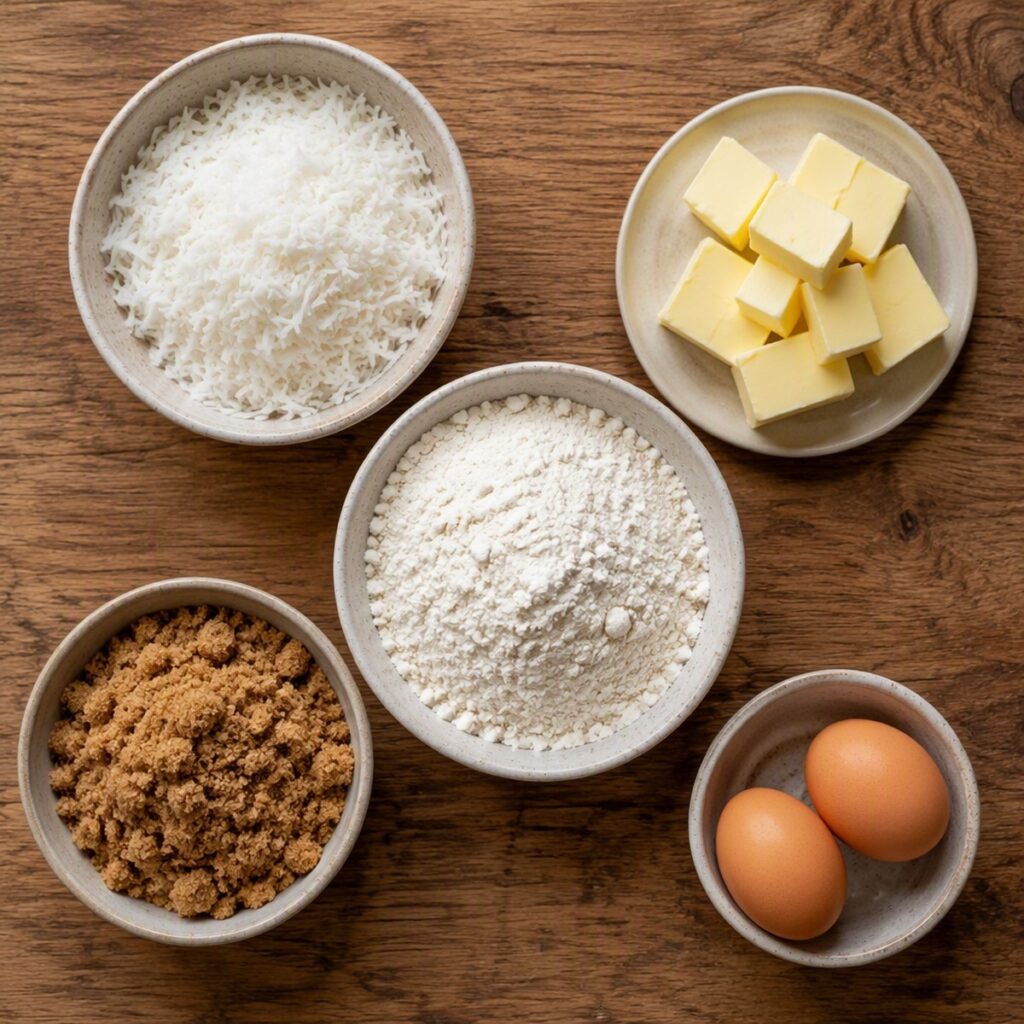
- 2 1/4 cups all-purpose flour
- 1/2 teaspoon salt
- 1 teaspoon baking soda
- 1 cup unsalted butter, softened
- 3/4 cup light brown sugar, packed
- 1/2 cup granulated sugar
- 2 large eggs
- 1 teaspoon vanilla extract
- 1/2 teaspoon coconut extract (optional — boosts coconut flavor, see FAQ below)
- 2 1/2 cups sweetened shredded coconut (see comparison below)
Tools You’ll Need
- Stand mixer or handheld electric mixer
- Large baking sheets
- Cookie scoop
- Wire cooling rack
Sweetened vs. Unsweetened Coconut: Which Should You Use?
This is the single most contradictory piece of advice across coconut cookies recipes online — some insist on sweetened coconut, others swear by unsweetened. Both work, but they produce genuinely different cookies:
| Coconut Type | Flavor | Texture | Best For |
| Sweetened, shredded (this recipe) | Strong coconut flavor, sweeter overall | Soft, moist, chewy | Classic coconut cookies |
| Unsweetened, flaked | Milder, more subtle coconut flavor | Slightly drier, more textured | Less-sweet coconut cookies, pairs well with add-ins like caramel or chocolate |
If you swap to unsweetened coconut, add an extra 2 tablespoons of sugar to the dough to compensate — otherwise the cookies will taste noticeably less sweet than a standard coconut cookies recipe.
How to Make Coconut Cookies, Step by Step
Nothing complicated here, just a few things worth getting right before you start.1. Preheat the oven to 350°F and line two baking sheets with parchment paper.
2. In a medium bowl, whisk together the flour, salt, and baking soda. Set aside.
3. In a stand mixer, beat the butter, brown sugar, and granulated sugar on medium speed until light and fluffy, about 3 minutes.
4. Add the eggs, vanilla extract, and coconut extract (if using). Mix on low until just combined, scraping the bowl as needed.

5. Add the flour mixture and mix on low until almost combined. Fold in the shredded coconut by hand until evenly distributed.
6. Scoop the dough into 2-tablespoon portions and place on the prepared baking sheets, leaving about 2 inches between cookies.

7. Bake for 10-12 minutes, until the edges are lightly golden and the tops look set but not browned.
You want the edges just barely turning gold — the centers will still look pale and a little soft, and that’s exactly right. They firm up as they cool.
8. Let the coconut cookies cool on the baking sheet for 5 minutes, then transfer to a wire rack to cool completely.

Toasted vs. Untoasted Coconut
Toasting the coconut is entirely optional, but it changes the cookie in a real way worth understanding before you decide:
| Coconut Prep | Flavor Change | How to Do It |
| Untoasted (this recipe) | Clean, straightforward coconut flavor | Use straight from the bag |
| Toasted | Deeper, nuttier, slightly caramelized flavor | Spread on a dry sheet pan, bake at 325°F for 5-7 minutes, stirring once, until golden |
Always let toasted coconut cool completely before folding it into the cookie dough — warm coconut can soften the butter in the dough and cause the cookies to spread more than intended.
Why Are My Coconut Cookies Flat, Dry, or Crumbly?
This covers the two most common coconut cookies complaints:
- Flat, spread-out cookies: Usually caused by butter that’s too soft or melted, or dough that sat out too long before baking. Make sure your butter is softened but still cool to the touch, and bake straight after scooping rather than letting the dough sit on a warm counter.
- Dry, crumbly cookies: Almost always comes down to too much flour. Spoon flour into the measuring cup and level it off rather than scooping directly from the bag, which packs in extra flour and dries out the dough.
- Cookies that don’t taste coconut-y enough: This is almost always a coconut-type issue — see the Sweetened vs. Unsweetened table above, and consider adding the coconut extract if you left it out.
- Overbaked, hard cookies: Coconut cookies should look slightly underbaked and pale on top when you pull them out — they firm up as they cool on the baking sheet. Waiting for them to look fully golden in the oven means they’ll be overdone by the time they cool.
Variations to Try
Coconut Girl Scout Cookies (Samoa-Style)
Inspired by the classic Samoa: toast the coconut first (see the table above), then once the cookies have cooled, dip the bottoms in melted dark chocolate and drizzle with warm caramel sauce. Let set on parchment paper before serving. This girl scout coconut cookies version is easily the most requested variation once people see it.

Coconut Chocolate Chip Cookies
Fold in 1 cup of semi-sweet chocolate chips along with the coconut, or use white chocolate chips for a milder, sweeter pairing. Chocolate chip coconut cookies made this way hold their shape just as well as the base recipe.
Coconut Oatmeal Cookies
Replace 1 cup of the flour with 1 1/2 cups of old-fashioned rolled oats for oatmeal coconut cookies with a heartier, chewier bite. This also works well as chocolate chip cookies with oats and coconut if you fold in chocolate chips at the same time.
Coconut Pecan Cookies
Fold in 3/4 cup chopped toasted pecans along with the coconut for extra crunch and a nuttier flavor that pairs naturally with the toasted coconut option above. Swap the pecans for chopped walnuts and add a mashed ripe banana for a banana coconut cookies twist, though you’ll want to add an extra 1/4 cup flour to account for the added moisture.
Coconut Flour Cookies (Gluten-Free)
Coconut flour cookies are not a simple 1-to-1 swap — coconut flour absorbs far more liquid than all-purpose flour. For cookies from coconut flour, use only 3/4 cup coconut flour in place of the 2 1/4 cups all-purpose flour, and add one extra egg to keep the dough from becoming too dry and crumbly. Fold in 1/2 cup chocolate chips for a coconut flour chocolate chip cookies version.
3-Ingredient Coconut Cookies
For a genuinely simple version, skip the flour-based dough entirely: whisk 3 egg whites with 1/2 cup sugar until frothy, then fold in 3 cups sweetened shredded coconut. Drop by spoonfuls and bake at 325°F for 15-18 minutes for a coconut macaroon cookie recipe result. You can also stir in melted coconut oil instead of butter for a dairy-leaning coconut oil cookies version of the base recipe, though the texture will be slightly less rich.
No-Bake Coconut Cookies
Melt 1/2 cup butter with 1/2 cup sugar and 1/4 cup milk, bring to a boil for 1 minute, then stir in 3 cups shredded coconut and 2 cups quick oats. Drop onto parchment paper and let set at room temperature for about an hour.
Coconut Bar Cookies
Press the dough into a lined 9×13-inch pan instead of scooping individual cookies, and bake at 350°F for 22-25 minutes until golden, then cut into squares once cool. You can also swap the granulated sugar for coconut sugar in the base recipe if you want a coconut sugar cookies variation with a slightly deeper, caramel-like flavor.
Common Mistakes to Avoid
- Using cold butter straight from the fridge — it won’t cream properly and the dough will be dense instead of fluffy.
- Overmixing once the flour is added — mix just until combined to avoid tough, dense coconut cookies.
- Crowding the baking sheet — coconut cookies spread as they bake, so leave real space between each scoop.
- Skipping the cooling rack — letting cookies cool completely on the hot baking sheet can leave the bottoms slightly soggy.
What to Serve With Coconut Cookies
- A cold glass of milk, for dunking
- Coffee or tea, for an afternoon treat
- A scoop of vanilla ice cream sandwiched between two cookies
- Alongside other cookies on a holiday dessert tray

Storage
I keep mine in an airtight container at room temperature and they’re still good five days later. To freeze baked cookies, layer them between sheets of parchment paper in a freezer-safe container for up to 3 months, then thaw at room temperature before serving. I usually freeze the dough instead, scooped and frozen solid on a tray, then transferred to a freezer bag, and bake it straight from frozen with an extra 1-2 minutes added on. Fresh out of the oven, the edges are just golden and the tops still look slightly underdone, that’s exactly when you want to pull them.
Nutrition (per cookie)
| Nutrient | Amount |
| Calories | 175 kcal |
| Carbohydrates | 21g |
| Protein | 2g |
| Fat | 9g |
| Saturated Fat | 6g |
| Sugar | 13g |
Nutrition values are estimates and will vary based on exact ingredients used.
Frequently Asked Questions
Can I use coconut flour instead of regular flour?
Not as a direct swap, I learned that one the crumbly way. Coconut flour absorbs far more liquid than all-purpose flour, so a 1-to-1 substitution will leave you with dry, crumbly cookies. See the Coconut Flour Cookies variation above for the ratio I actually use.
Do I have to use coconut extract?
No — it’s optional. Coconut extract boosts the coconut flavor noticeably, but the shredded coconut alone still gives a real coconut taste without it. Leave it out if you’d rather keep the flavor more subtle.
Can I make coconut cookies ahead of time?
Yes — the dough can be scooped and refrigerated for up to 3 days, or frozen for up to 3 months. Baked cookies also keep well; see the Storage section above.
How do I make coconut macaroon cookies instead?
Coconut macaroon cookies use a different base — egg whites and sugar instead of a butter-based dough. See the 3-Ingredient Coconut Cookies variation above for a simple macaroon-style version.
Why did my coconut cookies turn out dry?
Too much flour is the most common cause. Spoon flour into your measuring cup and level it off instead of scooping directly from the bag, which packs in extra flour and dries out the dough.
Related Recipes

Coconut Cookies
Ingredients
Equipment
Method
- Preheat oven to 350°F. Line two baking sheets with parchment paper.
- Whisk together flour, salt, and baking soda. Set aside.
- Beat butter, brown sugar, and granulated sugar until light and fluffy, about 3 minutes.
- Add eggs, vanilla extract, and coconut extract. Mix on low until combined.
- Add flour mixture, mix until almost combined, then fold in coconut by hand.
- Scoop into 2-tablespoon portions, spacing 2 inches apart.
- Bake 10-12 minutes until edges are lightly golden.
- Cool on the sheet 5 minutes, then transfer to a wire rack.
Notes
This recipe is intended for general home baking guidance. Baking times may vary based on your oven, coconut brand, and altitude. Always let coconut cookies cool fully before storing to avoid trapped moisture. Avoid eating raw cookie dough, as it can contain raw eggs and untreated flour.
Jonas Mitchell bakes a lot of cookies for RecipeValley, testing ratios until the texture holds. He’s not a registered dietitian, so treat the recipe as kitchen-tested, not medically reviewed.