Pink Salt Trick for Weight Loss: Real Recipe, Does It Work, and Safety Guide
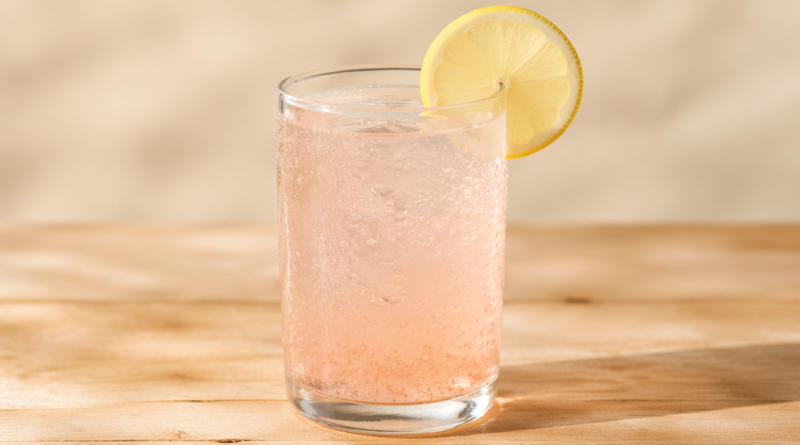
If your For You page has served you a glass of pink water and a promise of effortless weight loss, you’ve met the “pink salt trick.” This guide breaks down the pink salt trick for weight loss — the exact recipe, whether it actually works, and what’s genuinely safe to drink daily. It’s everywhere right now — TikTok, Instagram, even a shelf of Kindle e-books built entirely around it. The pitch is always the same: a pinch of Himalayan pink salt, a splash of lemon, a glass of warm water, and supposedly your metabolism, bloating, and cravings all fall in line.
Quick Summary
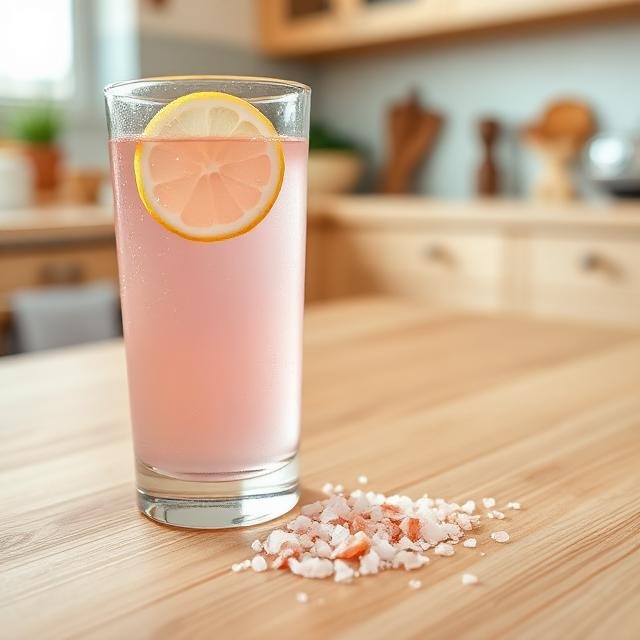
The pink salt trick is a morning drink of water, Himalayan pink salt, and usually lemon. There is no scientific evidence that it causes fat loss, boosts metabolism, or reduces bloating. A typical serving adds 144–575 mg of sodium, depending on how much salt is used, and it can be unsafe for people with high blood pressure, kidney disease, heart conditions, or a low-sodium diet. Sustainable weight loss still comes down to a calorie deficit, protein, movement, and sleep — not a morning drink.
Recipe Snapshot
| Prep Time | Servings | Calories | Sodium |
| 2 minutes | 1 drink | 0–20 kcal | ~144–575 mg per serving |
What Is the Pink Salt Trick?
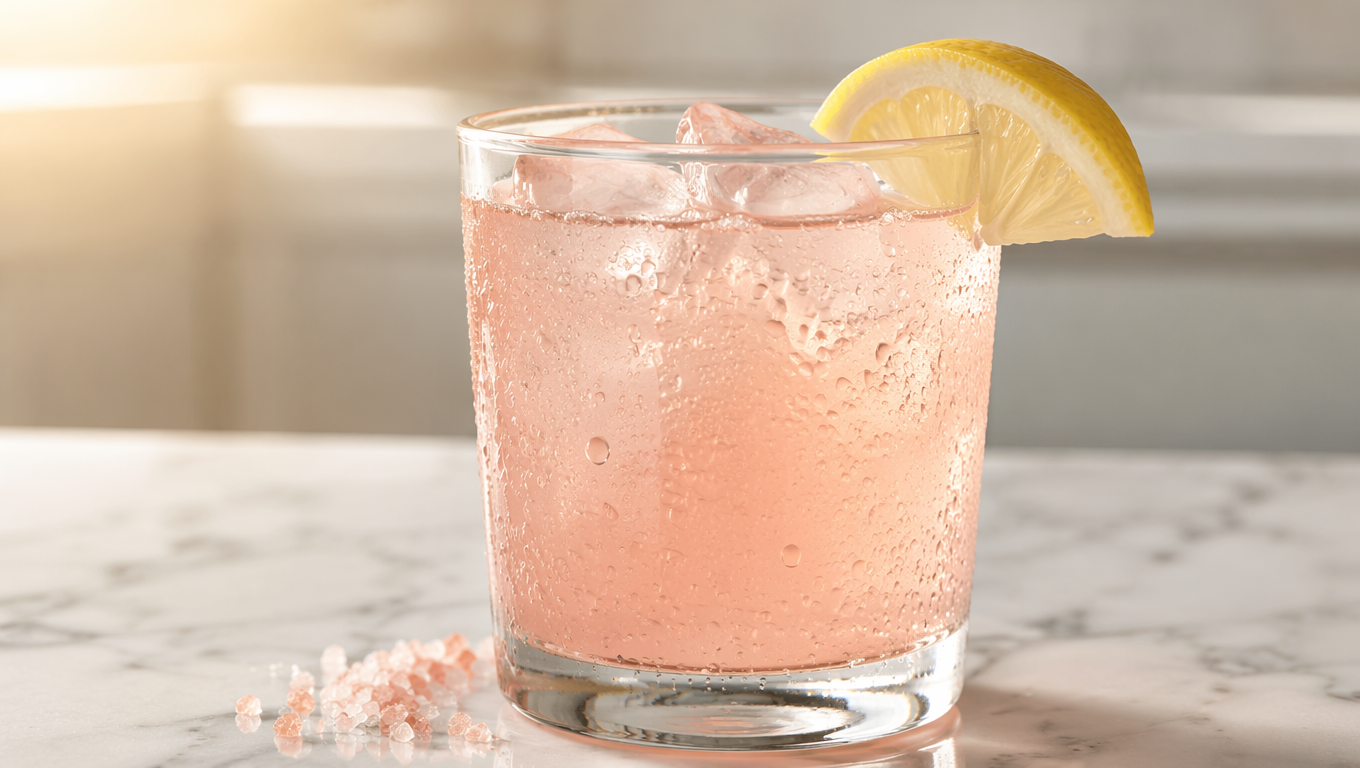
The pink salt trick is a morning drink made by dissolving a small amount of Himalayan pink salt in water, usually with lemon juice added for taste. So what is the pink salt recipe, exactly? It’s simply water, a small amount of Himalayan pink salt, and usually lemon juice — nothing more. It’s typically drunk first thing in the morning, before breakfast, with the idea that it “activates” digestion and hydration for the day.
Himalayan pink salt itself is a rock salt mined mostly in the Punjab region of Pakistan. Its color comes from trace amounts of iron oxide, along with tiny amounts of magnesium, potassium, and calcium. Chemically, though, it’s still over 95% sodium chloride — the same compound as ordinary table salt. Interest in pink Himalayan salt weight loss claims has exploded across social media, but as you’ll see below, the evidence doesn’t back them up.
Pink Salt Trick Recipe (Exact Measurements)
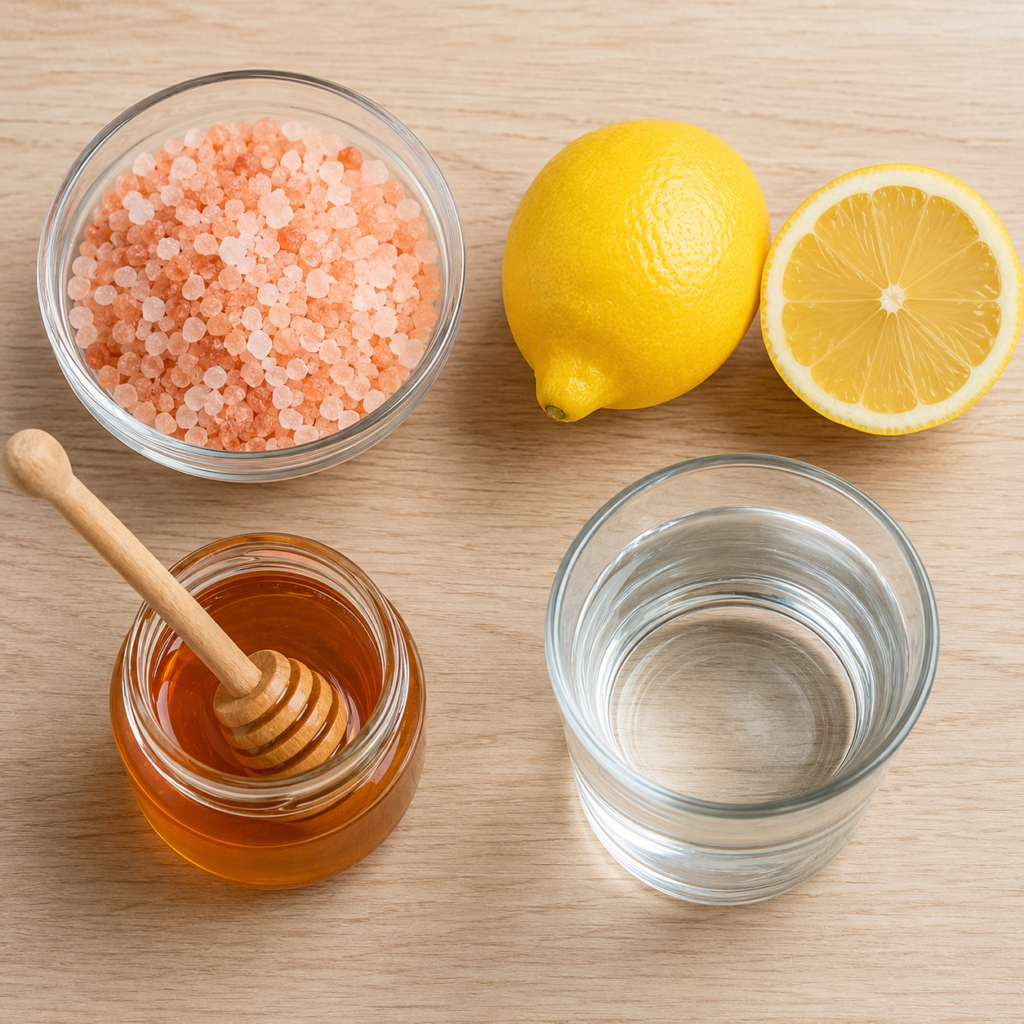
Here are the pink salt trick ingredients for the base 3-ingredient version most recipes online are built from, with honey as an optional 4th add-in. It makes one serving.
Ingredients
- 1 cup (8–10 oz) warm or room-temperature water
- 1/8 teaspoon fine Himalayan pink salt (do not exceed 1/4 teaspoon)
- Juice of 1/2 a fresh lemon
- Optional 4th ingredient: 1 teaspoon raw honey or pure maple syrup, for sweetness
Instructions
- Pour the water into a glass.
- Add the pink salt and stir until fully dissolved.
- Squeeze in the lemon juice.
- Stir in honey or maple syrup if you’d like it sweeter.
- Drink on an empty stomach, first thing in the morning, sipped slowly rather than gulped.
Popular Variations
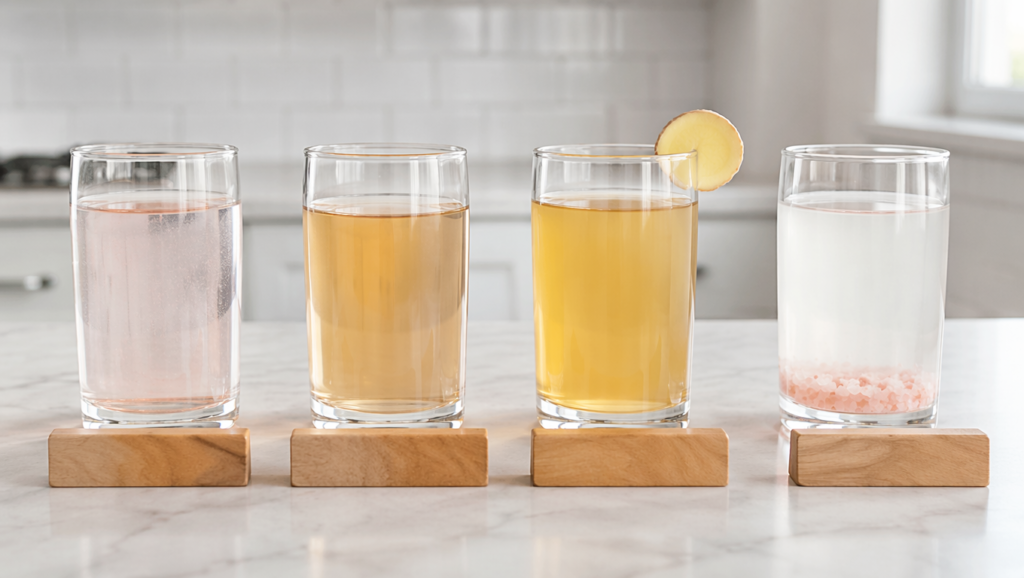
Once the base recipe caught on, people started adding their own twist. Here’s how the most searched-for versions compare and whether they add anything beyond flavor:
| Variation | What’s Added | What It Actually Adds |
| 3-ingredient classic | Water + pink salt + lemon | The base recipe above — minimal sodium, a small amount of vitamin C from the lemon |
| 4-ingredient version | Above + honey/maple syrup OR apple cider vinegar | Sweeter or tarter flavor; ACV has limited evidence for appetite, nothing for fat loss |
| Baking soda version | Water + pink salt + lemon + 1/4 tsp baking soda | Fizzy texture only; adds sodium bicarbonate on top of the sodium already in the salt |
| Ginger version | Above + a slice of fresh ginger | Ginger has real anti-nausea, digestion-soothing properties; no fat-loss effect |
| Sole (“soh-lay”) water | Saturated pink salt brine, diluted | Much higher sodium per serving than the standard recipe |
None of these additions turn the drink into a weight-loss tool — they change the taste, not the physiology.
Pink Salt Trick for Weight Loss: Does It Actually Work?
Short answer: no. There is no research showing that pink salt causes fat loss, boosts metabolism, or reduces bloating.
Weight loss comes down to a calorie deficit — burning more calories than you take in over time. Salt, pink or otherwise, contains zero calories and has no mechanism for burning fat. Any scale movement after a few days on this routine is almost always water weight, not fat, and it typically comes back once you stop.
In fact, the opposite of the “debloating” claim tends to be true. Sodium is one of the main drivers of water retention in the body. A concentrated dose of salt first thing in the morning is more likely to make you feel puffy than lean.
What usually explains people’s results isn’t the salt — it’s everything that comes with the ritual. Swapping a sugary coffee drink for a zero-calorie glass of water, building a consistent morning routine, and simply paying more attention to what you eat for the rest of the day all genuinely help. The salt is just along for the ride.
How Much Sodium Are You Actually Drinking?
This is the part most viral recipes leave out. What matters for your health isn’t whether the salt is pink — it’s the total sodium you’re adding. Using roughly 2,300 mg of sodium per teaspoon of salt as a baseline:
| Amount of Salt Used | Approx. Sodium | % of Recommended Daily Limit* |
| 1/16 tsp (a small pinch) | ~144 mg | ~6% |
| 1/8 tsp (recommended) | ~288 mg | ~13% |
| 1/4 tsp (common viral version) | ~575 mg | ~25% |
| Sole water (1 tsp brine) | 1,000+ mg | 40%+ |
*Based on the general 2,300 mg/day sodium limit. If you already eat packaged, restaurant, or processed food regularly — as most people do — this drink can push you closer to (or past) your daily sodium budget before you’ve had breakfast.
What Is “Sole” Water, and Is It Different?
If you’re looking for the sole water recipe specifically, here’s how it differs from the standard version. “Sole” water (pronounced soh-lay) is an older wellness practice that some pink salt trend followers have adapted. It’s made by dissolving pink salt into a jar of water until the water is fully saturated and can’t absorb any more salt, then letting it sit for 24 hours. A teaspoon of that concentrated brine is then stirred into a fresh glass of water and consumed.
Because it’s a saturated brine, sole water delivers considerably more sodium per serving than the standard pink salt trick recipe — which makes the safety guidance below even more relevant if you’re using this version.
Is the Pink Salt Trick Safe? Who Should Avoid It
For a healthy adult with no underlying conditions, a small amount (1/8 teaspoon or less) once a day is unlikely to cause harm on its own. But “unlikely to harm most people” isn’t the same as “safe for everyone,” and several groups should skip it or check with a doctor first:
- People with high blood pressure — added sodium can raise it further
- People with kidney disease — kidneys already struggle to filter excess sodium
- People with heart disease or heart failure
- Anyone on a doctor-prescribed low-sodium diet
- Pregnant women — sodium needs shift during pregnancy
- Anyone with acid reflux (GERD) — the lemon juice can aggravate symptoms
There’s also a lesser-discussed risk: iodine. Regular table salt is fortified with iodine, which your thyroid depends on. Pink Himalayan salt is not iodized. If you replace all your table salt with pink salt long-term without getting iodine from other sources (seafood, dairy, eggs), it can gradually affect thyroid function.
One more practical note: because pink salt is a raw, minimally processed, mined product, some tested samples have shown trace heavy metals, including lead, above safety thresholds in certain batches. It’s not a reason to panic over occasional use, but it is a reason to buy from a reputable, food-grade source rather than the cheapest bulk option.
Pink Himalayan Salt vs. Table Salt
| Pink Himalayan Salt | Table Salt | |
| Sodium chloride content | ~95–98% | ~97–99% |
| Trace minerals | Small amounts of iron, magnesium, potassium, calcium | Minimal, unless added |
| Iodine | Not fortified | Usually fortified |
| Processing | Minimally processed | Refined; anti-caking agents added |
| Health difference in practice | Negligible — mineral amounts are too small to matter | Negligible, aside from iodine content |
The honest takeaway: pink salt isn’t a “healthier” salt in any meaningful way. If you prefer its taste or texture for cooking, that’s a fine reason to use it — health benefits just aren’t one.
Setting the Record Straight on the Viral Claims
A lot of what’s driving searches for this trend isn’t the recipe itself — it’s misinformation attached to it. A few things worth clearing up:
No, a specific doctor did not invent or endorse this recipe
Searches referencing various television doctors and public health figures alongside this trend have circulated widely, but there is no verified endorsement from any of them tying their name to a specific pink salt weight-loss protocol. Videos using AI-generated deepfakes of celebrities promoting “miracle” weight-loss drinks have also been documented and debunked by fact-checking organizations. If a video shows a celebrity or doctor “endorsing” a drink recipe, verify it through a primary source before trusting it.
There’s no “secret” ingredient list
You’ll see queries for a “real” or “original” recipe, as if a hidden version exists somewhere. It doesn’t — the recipe above (water, pink salt, optional lemon/honey/ACV) is the whole thing. Anyone selling a “secret” capsule, powder, or proprietary blend version of this drink is monetizing a trend that has no clinical backing to begin with.
Pink salt trick capsules
Some sellers now market capsule or powder versions of the “pink salt trick.” These don’t change the underlying facts: there’s no evidence any form of pink salt causes weight loss, and a supplement version removes your ability to control your own sodium dose — arguably making it a worse choice than the DIY drink.
What Actually Helps With Weight Loss
None of this means hydration or morning routines don’t matter — they do. It just means the salt isn’t the active ingredient. What the evidence actually supports:
- A consistent calorie deficit, built around whole foods rather than ultra-processed ones
- Enough protein at each meal to support satiety and preserve muscle
- Regular movement — a mix of cardio and strength training
- Plain water, spread through the day, rather than a single salted glass in the morning
- Consistent sleep, since poor sleep disrupts hunger hormones
If you like the ritual of a morning drink, keep it — just leave the salt dose small (1/8 teaspoon or less) and treat it as a hydration habit, not a weight-loss method.
Frequently Asked Questions
What is the pink salt trick recipe?
It’s a drink made from 1 cup of water, 1/8 teaspoon of Himalayan pink salt, and optionally lemon juice or honey, consumed on an empty stomach in the morning. See the full recipe with measurements above.
What are the 3 ingredients in the pink salt trick?
The core, most-searched version uses just three ingredients: water, Himalayan pink salt, and lemon juice. Honey, apple cider vinegar, ginger, and baking soda are optional add-ins in various online variations, not part of the original three.
Does the pink salt trick work for weight loss?
No. There’s no scientific evidence that pink salt causes fat loss, boosts metabolism, or reduces bloating. Any short-term scale drop is water weight, not fat.
Is the pink salt recipe with baking soda different?
It’s the same base recipe with 1/4 teaspoon of baking soda added for fizz. It doesn’t add any weight-loss benefit — it adds sodium bicarbonate on top of the sodium already in the salt, which is worth factoring into your daily sodium total.
Is the pink salt trick safe to drink every day?
For most healthy adults, a small daily amount (1/8 teaspoon or less) is generally considered low-risk. People with high blood pressure, kidney disease, heart conditions, or a prescribed low-sodium diet should check with a doctor first, and no one should exceed a light pinch.
What is the sole water recipe, and is it the same thing?
Sole water is a saturated pink salt brine, prepared by soaking salt in water for 24 hours, then diluting a teaspoon of that brine in a fresh glass. It delivers significantly more sodium than the standard recipe, so it carries more risk.
Are pink salt trick reviews reliable?
Most online reviews follow the same pattern — enthusiasm in week one, followed by silence rather than a documented long-term result. That pattern is consistent with a habit-and-placebo effect rather than a genuine fat-loss mechanism.
Is pink Himalayan salt vs table salt actually different for health?
Not meaningfully. Both are over 95% sodium chloride. Pink salt’s trace minerals are present in amounts too small to matter nutritionally, and unlike most table salt, it isn’t fortified with iodine.
Can pink salt be taken as a capsule instead of a drink?
Capsule or powder versions exist, but they don’t change the underlying evidence — there’s still no proof pink salt supports weight loss in any form, and a capsule makes it harder to control your sodium dose.
Did a celebrity or doctor create this recipe?
No verified endorsement exists from the public figures commonly mentioned alongside this trend. Some videos claiming celebrity endorsement have been identified as AI-generated deepfakes by independent fact-checkers.
Related Recipes
- Baking Soda Shot for Weight Loss
- Gelatin Weight Loss Recipe: The Complete Guide
- Apple Cider Vinegar Gummies Recipe
─────────────────────────────
Nutrition Information (Per Serving — Base Recipe)
| Nutrient | Amount |
| Calories | 0–20 (0 without honey/maple syrup) |
| Sodium | ~288 mg (at 1/8 tsp salt) |
| Sugar | 0–4 g (if honey/maple syrup added) |
| Carbohydrates | 0–5 g |
Values are estimates and will vary based on the exact amount of salt and optional add-ins used.
Pink Salt Trick for Weight Loss
Ingredients
Equipment
Method
- Pour the water into a glass.
- Add the pink salt and stir until fully dissolved.
- Squeeze in the lemon juice.
- Stir in honey or maple syrup if you'd like it sweeter.
- Drink on an empty stomach, first thing in the morning, sipped slowly rather than gulped.
Notes
- Salt amount can range from 1/16–1/4 tsp depending on taste and sodium tolerance — see the sodium breakdown table in the article.
- Not recommended for those with high blood pressure, kidney disease, heart conditions, or a prescribed low-sodium diet without doctor approval.
- Variations (ACV, ginger, baking soda, sole water) are covered separately in the article and are not part of this base card.
Disclaimer: This article is for informational purposes only and is not a substitute for medical advice. If you have high blood pressure, kidney disease, heart disease, or any condition affected by sodium intake, talk to your doctor before adding any salted drink to your routine.
About the Author
Jonas Mitchell is a recipe developer at RecipeValley, focused on high-protein and weight-loss-friendly recipes that are simple to make at home. Every recipe is tested for taste and consistency before publishing. Jonas does not hold a clinical nutrition credential; health-related information in this article is compiled from publicly available nutrition data and general dietary guidance, and should not replace advice from a doctor or registered dietitian. Contact: contact@recipevalley.com
